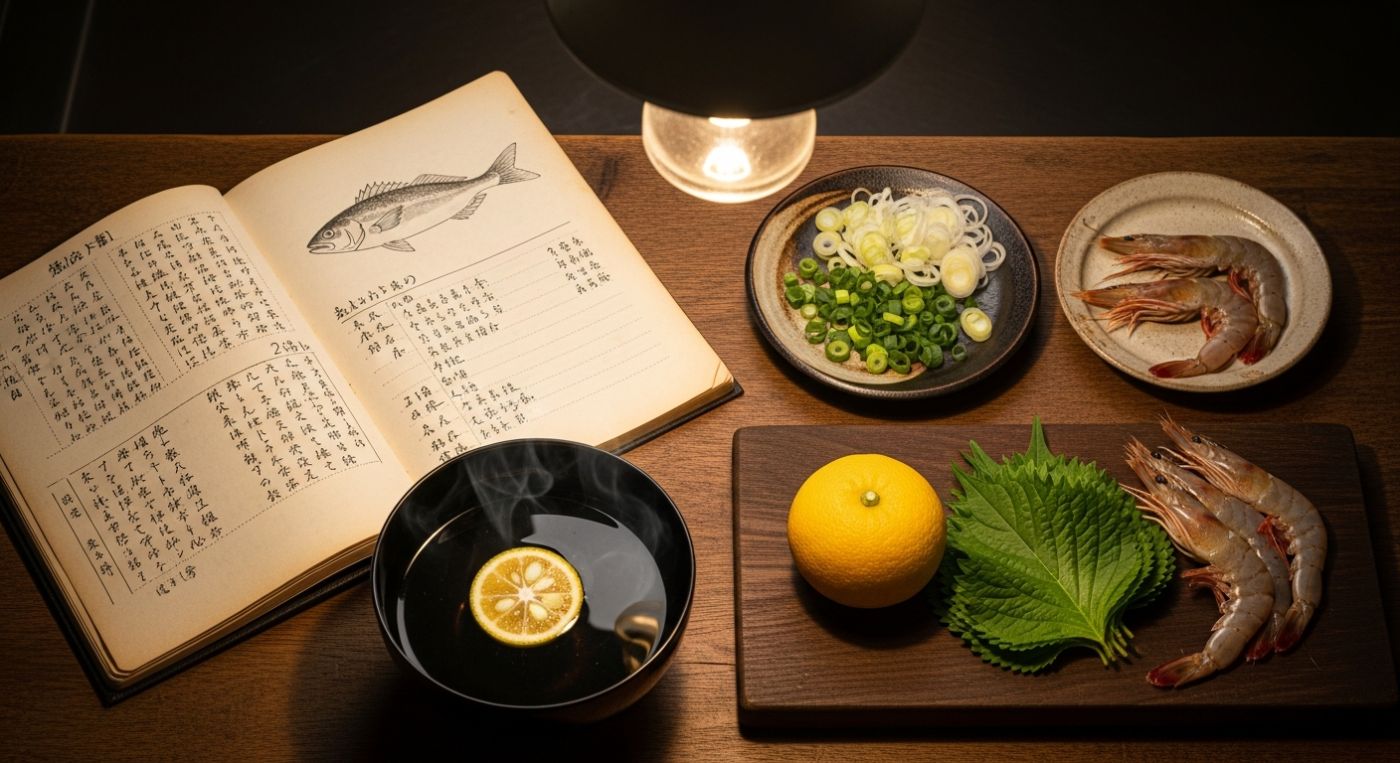
A young Tokyo chef inherits her late grandmother’s wartime journal — and inside it, a recipe so extraordinary that the women who tasted it seventy years ago still remember the meal. Now she must travel the length of Japan to find the ingredients, the techniques, and the story behind it.
The Story
Haruki Mori runs a small, anonymous tonkatsu shop in Shimokitazawa. She is talented but directionless — cooking by rote, serving regulars who never ask for more, measuring her life in litres of oil. When her grandmother Sachiko dies at ninety-four, the family finds nothing of value in her apartment except a water-stained notebook written in a hand so careful it looks like calligraphy.
The notebook is a journal from 1945, and at its centre is a recipe for a dish Sachiko prepared once, in the final week of the war, using ingredients she bartered, foraged, and in one case stole. The dish fed twelve women in a textile factory — women who, Haruki discovers, are still alive and still talk about that meal as the finest thing they have ever eaten.
Haruki sets out to recreate it. The journey takes her from the kelp beds of Hokkaido to a citrus grove in Shikoku, from a miso brewery that has operated continuously for three hundred years to a fishing village where the last practitioner of a vanishing net technique agrees to teach her — but only if she fishes beside him for a week first.
A recipe is not a list of instructions. It is a letter someone wrote to the future, hoping the future would be hungry.
Sachiko’s journal, read by Haruki
Cast & Crew
- Director: Naomi Kawase
- Starring: Aoi Miyazaki, Chieko Baisho, Ken Watanabe
- Cinematography: Yutaka Yamazaki
- Culinary Advisor: Yoshihiro Murata
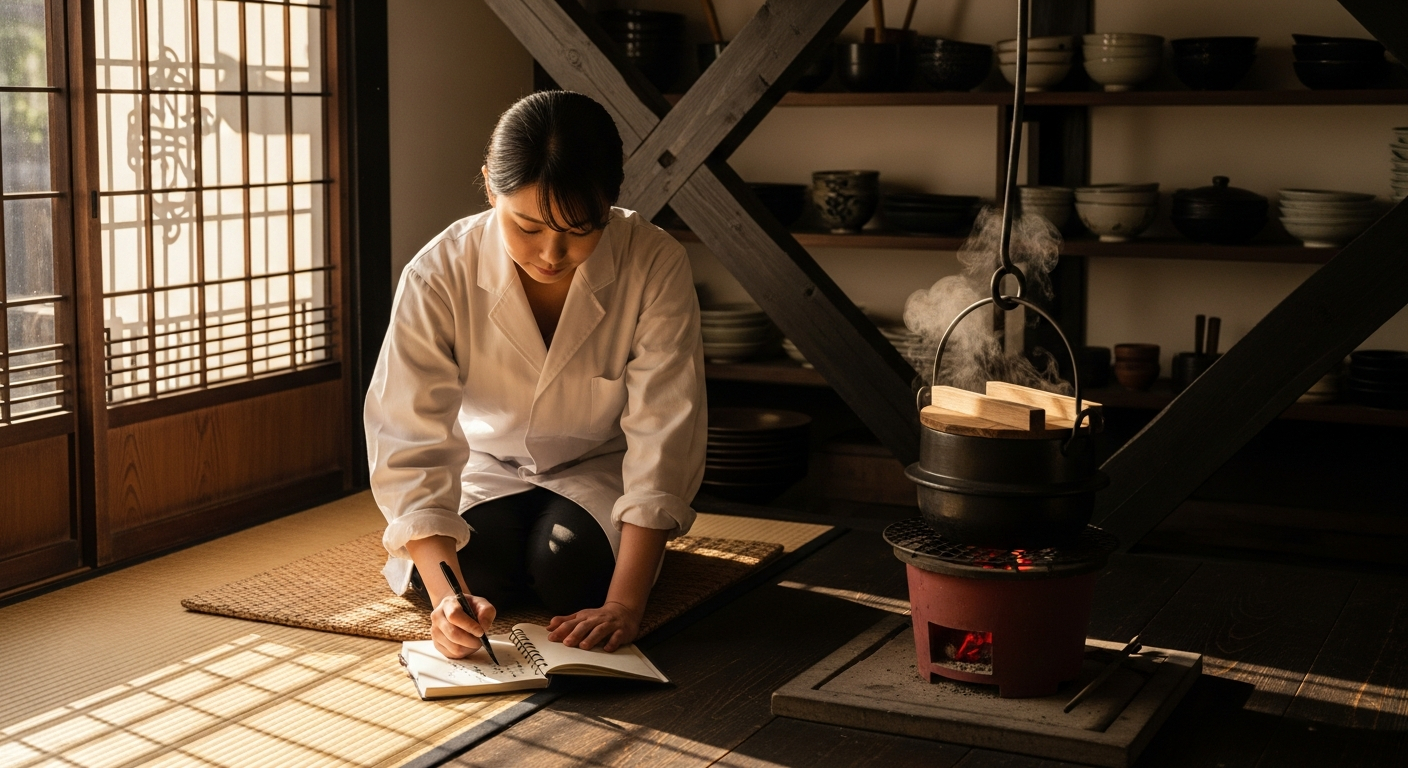
Kawase insisted on shooting in sequence, so that Miyazaki’s growing confidence in the kitchen — she trained for three months under Murata — would register on screen as Haruki’s own transformation. Every dish in the film was prepared and plated in real time; nothing is a prop. The final reveal of the completed recipe, served to the surviving women in a sunlit room overlooking Nara, was filmed in a single unbroken take that runs seven minutes and leaves the camera — and the audience — in tears.